

Introduction
Are you running a shop, clinic, restaurant, café, or service business in Delhi but struggling to attract new customers? Posting regularly on social media is useful, but organic reach alone may not be enough to achieve your business goals.
This is where Meta Ads management in Delhi can help. Facebook and Instagram advertising allows businesses to promote their products and services to selected audiences based on location, interests, and other available targeting options.
For example, a café in Janakpuri may want to promote a weekend offer to people nearby, while a coaching centre in Dwarka may want to generate enquiries from prospective students.
With a clear advertising strategy, relevant creatives, and regular performance monitoring, businesses can use Meta Ads to increase visibility and encourage potential customers to take action.
NearGrow Ads helps businesses approach Facebook and Instagram advertising with a structured plan designed around their marketing goals.
What Is Meta Ads Management?
Meta Ads management is the process of planning, creating, launching, monitoring, and improving paid advertising campaigns on platforms such as Facebook and Instagram.
Instead of simply publishing a post and waiting for people to discover it, businesses can use advertising campaigns to reach audiences relevant to their products or services.
A Meta Ads campaign may focus on:
- Brand awareness: Introduce your business to more relevant people.
- Lead generation: Encourage potential customers to submit enquiries.
- Website traffic: Bring interested users to your website or landing page.
- Messages and enquiries: Encourage customers to contact your business.
- Sales and conversions: Encourage purchases or other valuable customer actions.
The right campaign depends on what you sell, who your customers are, your budget, and the action you want people to take.
Why Is Meta Ads Management Important for Businesses in Delhi?
Delhi has a diverse business market, from neighbourhood shops and salons to restaurants, healthcare providers, educational institutes, and professional service businesses.
Reaching the right audience is important because not everyone who sees an advertisement will be interested in the offer.
A location-aware advertising strategy can help businesses focus their campaigns on relevant customer groups.
1. Reach Potential Customers in Your Target Area
A local business can plan campaigns around the areas it serves instead of automatically targeting a wider audience.
For example, a salon in Rajouri Garden may want to attract customers from nearby neighbourhoods. A restaurant in Lajpat Nagar could promote a special menu to people who are likely to visit.
The targeting settings should reflect the actual service area and the audience available on the advertising platform.
2. Promote Offers and Services
Businesses can use Facebook and Instagram ads to introduce seasonal offers, new products, appointment services, special menus, or limited-time promotions.
A clothing store could advertise a festive collection, while a dental clinic could promote appointment bookings using appropriate, clear messaging.
The offer should be genuine, easy to understand, and relevant to the intended audience.
3. Generate More Enquiries
For service businesses, the main goal may be to receive qualified enquiries rather than simply collect likes.
A well-planned campaign can direct potential customers to a website, an eligible lead form, or a messaging channel where they can ask questions and learn more.
However, the number and quality of enquiries depend on the campaign, audience, creative, budget, offer, and follow-up process.
4. Measure Advertising Performance
Meta Ads provides reporting tools that help businesses evaluate campaign activity.
Depending on the campaign setup, useful metrics may include impressions, reach, link clicks, cost per result, leads, and conversions.
Reviewing these metrics helps identify which advertisements deserve further testing and which may need improvement.
Step-by-Step Guide to Running Meta Ads in Delhi
Step 1: Define Your Business Goal
Before launching a campaign, decide what success means for your business.
Do you want more calls, WhatsApp enquiries, website visits, appointment bookings, or online orders?
Choose one primary goal for each campaign. This makes it easier to select the appropriate campaign setup and evaluate performance.
For example, a local coaching institute may prioritise course enquiries, while an online store may focus on completed purchases.
Step 2: Understand Your Target Audience
Identify the customers most likely to benefit from your product or service.
Consider:
- The location your business serves.
- The problems your customers want to solve.
- Their likely interests and needs.
- The offer that would motivate them to enquire.
- The information they need before making a decision.
For a business serving West Delhi, the campaign should reflect its real customer catchment area rather than targeting all of Delhi without a clear reason.
Use only relevant targeting options available in Meta Ads Manager, and comply with applicable advertising policies.
Step 3: Prepare Your Ad Creative
Your advertisement should communicate the offer quickly and clearly.
Use a suitable image, short video, carousel, or other format based on your objective. Include a clear message, the main customer benefit, and an appropriate call to action.
For example, a café could feature its menu and ambience, while a service provider could explain a common customer problem and how the service addresses it.
Make sure your creative is readable on mobile screens, uses accurate information, and does not make unsupported promises.
Step 4: Choose the Right Campaign Structure
Meta Ads campaigns use a structure involving campaigns, ad sets, and individual ads.
A campaign defines the overall objective. Ad sets organise settings such as audience, schedule, budget, and placements. Ads contain the creative and message shown to the audience.
A sensible structure helps you understand which audience and creative combinations are performing well without creating unnecessary complexity.
For a smaller business, starting with a manageable campaign structure can make testing and reporting easier.
Step 5: Set a Realistic Budget
Your advertising budget should reflect your business goals, profit margins, available funds, and the cost of reaching your intended audience.
Separate the advertising spend paid to Meta from the fee charged for campaign management.
Before launching, decide how much you can reasonably spend during the test period and what results you need to justify further investment.
Avoid assuming that a particular budget will guarantee a fixed number of customers. Advertising results vary between businesses and campaigns.
Step 6: Launch and Monitor the Campaign
Once the campaign is reviewed and approved, monitor its performance regularly.
Look beyond likes and impressions. Check whether the advertisement is generating relevant clicks, genuine enquiries, bookings, or purchases.
If an ad receives attention but few enquiries, review the offer, audience, creative, and destination page. If enquiries are coming in but not turning into customers, examine response times, pricing, lead quality, and the sales process.
Step 7: Optimise and Report Results
Campaign optimisation involves reviewing performance and making evidence-based adjustments.
Depending on the results, this may include testing new creative variations, refining audience settings, reviewing placements, or improving the enquiry process.
A useful report should explain what happened, which metrics matter, what was learned, and what should be tested next.
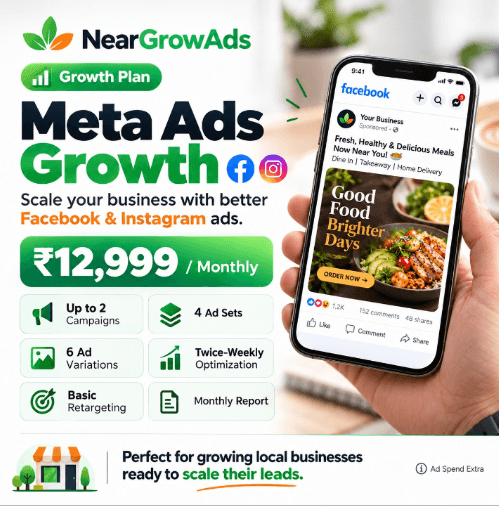
NearGrow Ads' Meta Ads Growth Plan includes up to two ad campaigns, four ad sets, six ad variations using client-supplied assets, twice-weekly optimisation, basic retargeting where eligible, and monthly performance reporting.
Common Meta Ads Mistakes to Avoid
Businesses can waste advertising budget when they launch campaigns without a clear plan. Avoid these common mistakes:
- Boosting posts without a clear objective: Choose a campaign goal that matches the business outcome you want.
- Targeting too broadly: Focus on the people and locations that make sense for your offer.
- Using unclear creatives: Explain what you offer and why it matters.
- Ignoring the customer journey: Ensure the website, form, or messaging destination works properly.
- Measuring only likes: Track meaningful actions such as qualified enquiries and completed purchases.
- Changing campaigns too frequently: Allow sufficient time and data for useful evaluation before making major adjustments.
- Failing to follow up: Respond to genuine enquiries promptly and professionally.
- Ignoring advertising costs: Track both ad spend and management fees when evaluating profitability.
- Expecting guaranteed results: No responsible advertising strategy can guarantee a specific number of leads or sales in every situation.
Pro Tips for Better Facebook and Instagram Advertising
Match the Advertisement to the Customer's Needs
A strong advertisement answers a customer's question: "Why should I choose this business?"
Focus on a genuine benefit, a relevant offer, or a problem your service solves.
Test Different Creative Variations
Try different headlines, images, videos, and calls to action. Change elements in a structured way so you can learn which messages connect with your audience.
Use high-quality vertical video when suitable for Reels and Stories placements, keeping essential text and visuals within the platform's recommended safe areas.
Make Enquiries Easy
If your goal is to generate leads, reduce unnecessary steps between seeing the ad and contacting your business.
Keep forms simple, provide accurate contact information, and ensure that someone is responsible for responding to enquiries.
Connect Advertising with Local SEO
Paid advertising and local SEO serve different purposes, but they can support the same business growth strategy.
Meta Ads can introduce your offer to potential customers, while a well-maintained website and Google Business Profile can help people research your business and find relevant information.
Make sure your business name, contact details, services, opening hours, and location information are accurate wherever they appear.
Review Lead Quality, Not Just Lead Quantity
Ten enquiries are not necessarily more valuable than five. What matters is whether those enquiries come from people who need your service and can become customers.
Review lead quality alongside cost per lead, conversion rate, sales value, and profitability wherever reliable data is available.
Conclusion
Growing a business online takes more than publishing attractive social media posts. A clear offer, relevant audience, suitable creative, realistic budget, and consistent performance review are important parts of an effective advertising strategy.
For shops, clinics, cafés, restaurants, startups, and service providers in Delhi, Meta Ads can be one way to introduce their services to potential customers and encourage enquiries.
The key is to approach advertising with a plan, measure meaningful results, and improve campaigns based on evidence rather than assumptions.
Grow Your Business with NearGrow Ads
Looking to promote your business through Facebook and Instagram advertising?
NearGrow Ads offers a Meta Ads Growth Plan for businesses seeking a more structured approach to campaign management and optimisation.
The listed plan costs ₹12,999 per month for management, with advertising spend and certain additional services charged separately.
Contact NearGrow Ads to discuss your business goals, target audience, advertising requirements, and the most suitable next step.
NearGrow Ads — Grow Local. Get More Customers.